
Corrupt Government
See other Corrupt Government Articles
Title: "Virginia Dems May Have Gerrymandered Themselves Straight Into a Legal Buzzsaw - Former AG Explains It All"
Source:
RedState.com
URL Source: https://redstate.com/terichristoph/ ... n-cuccinelli-on-scova-n2201638
Published: Apr 24, 2026
Author: Teri Christoph
Post Date: 2026-04-24 10:52:26 by Mudboy Slim
Keywords: None
Views: 7
"If I were a gambling man, I'd bet on it." This is what the Republican former attorney general of Virginia, Ken Cuccinelli, told me when I asked him how he thought the Supreme Court of Virginia (SCOVA) would rule on the gerrymandering referendum that just passed this week. Cuccinelli was my guest on the most recent edition of my podcast – recorded Thursday, so the information is fresh – and he had some enlightening information to share on the heavy burden that now rests on Democrats to prove they didn't violate the state constitution in seven different ways from Sunday to get this referendum in front of voters. It was some hopeful news for those of us who have come to distrust courts and just assume activist judges will ruin everything good. Also of importance: it has been confirmed that SCOVA will hear arguments starting Monday. WATCH: TRANSCRIPT: Teri Christoph (01:44) Hey everybody, I am really happy to welcome today Ken Cuccinelli. He was Attorney General of Virginia back in the day, but a great expert. He's really kept his eye on the legal wranglings around the gerrymandering referendum, which of course just passed this week in Virginia. So welcome Attorney General Cuccinelli. Thrilled to have you as I was just mentioning, you were my state Senator back in the day. So we are both long time Virginians. Ken Cuccinelli (02:10) Yes, yes, and a little bit sad this week, but there's hope. Teri Christoph (02:14) There is, and I actually thought, I know that there was a big ruling out of Tazewell County yesterday, but I actually thought a better place might be to start what happened before the referendum. There were legal challenges to this referendum going back months, weeks, and the Supreme Court of Virginia sort of punted on it. And I know Tazewell's kind of been a main figure in all of this. So it might be helpful to know what happened before we even went to the polls earlier this week. Ken Cuccinelli (02:41) Yeah. So the simple reason is punted sounds like ducked and, under Virginia law, over a hundred years of precedent, ⁓ the vote in the referendum is part of the legislative process and the courts will not take up a challenge to a legislative act until after the legislative process is complete. And, the easy analogy is the people voting yes or no, are the equivalent of a governor signing or vetoing a piece of legislation that comes to her desk. And if she vetoes it, it's over, right? There's nothing to consider. Had we voted no, there would be nothing for the court to do. But the yes vote is equivalent to signing a bill. And so now the courts will engage and test the constitutionality and the adherence to constitutional requirements of this referendum. And the other side was just awfully brazen in how they egregiously violated our state constitution in numerous ways. So I think that it is likely that by mid-May or so, the Supreme Court may throw this out. Teri Christoph (04:00) So you're saying that we shouldn't read into too much about them, not considering anything before? I think it was in March maybe that they decided. Ken Cuccinelli (04:06) No, you shouldn't read anything into it at all. Frankly, if anything, goes the other way. They were abiding by their precedent, but they also said, and they made a statement along the lines of, know, we have very grave concerns about these issues. That is, I can't tell the non-lawyers here just how rare that kind of a brushback pitch is from a court. I think they were suggesting to the people pushing this forward, hey, don't get your hopes up too much. Teri Christoph (04:42) Really? I think a lot of us misread them not taking action by allowing it to get on the calendar and go ahead. I definitely read it as they're not taking this seriously. Ken Cuccinelli (04:48) Well, right. Because, well, we knew the, you know, 110-year-old processor case and that, you know, first decided a referendum, meaning whether to even take up an issue going to a referendum or not. And we've stuck with that law for more than a hundred years. Teri Christoph (05:00) Okay, so is it easier to start with Tazewell from yesterday or is it easier just to kind of go through what the arguments against the constitutionality of this referendum, which of course passed, but barely. Ken Cuccinelli (05:15) It's probably easier and more helpful to people to look at what's in the Supreme Court. So there are three court cases at the moment. One in the Supreme Court that did start in Tasswell, but this is the one they put on hold. And then yesterday's Tasswell ruling ⁓ added a third constitutional problem. Really, he decided an obvious one. And then the fourth constitutional problem is related to the maps themselves. Because they're so extremely gerrymandered, the most gerrymandered maps of our lifetimes in Virginia. And we have a constitutional provision that requires compactness and contiguity. And if this map doesn't violate that, then no map ever will. Teri Christoph (06:04) I'm in Loudoun and nothing's really happened to me in Loudon, but the rest of the state is just woo. Ken Cuccinelli (06:13) Yeah, it all kind of starts in Fairfax and then it fingers out. But the court won't get to the map unless it upholds the referendum. And the referendum has very serious constitutional challenges to deal with. So the two in the Supreme Court both relate to the first passage of the amendment through the General Assembly. And like most states, to amend Virginia's constitution, the General Assembly has to pass the amendment twice in the exact same form, once on either side of an intervening election. And therein lies their biggest problem. So they passed this proposed amendment for the first time on Halloween appropriately, last year, 2025. And in Virginia, of course, we have odd year elections. Abigail Spanberger was elected last year, and so was the whole House of Delegates. So they were literally, one other factoid. The last time the Democrats had full control, House, Senate and governorship, they gave us these so unpleasant 45 day elections. So we don't really just have an election day. Election day isn't even the end. It's just the last day you can vote. They are still receiving ballots now as you and I speak. So it even runs beyond the election day. It's so silly. There's no reason ever for this amount of early voting and it really messes up security oversight and it works these election officials to death. But that's another issue, except that it's not. So the 2025 election began September 19th. So people had been voting for six weeks when they passed this first passage of the amendment. And they want to count the 2025 election as the constitutionally required intervening election. And there are... Teri Christoph (08:21) Right, and at that time, like, of thousands of ballots, because I remember it coming out of absolutely nowhere in October, and then hundreds. yeah, I mean, so that seems... not right to me. Ken Cuccinelli (08:35) Not just to you. You're not alone. Teri Christoph (08:39) You know, I think that's a great thing to point out because a lot of people are feeling pretty alone right now. Ken Cuccinelli (08:45) Well, and I understand that we all want to win, right? And we see the horror of Democrat control. We're seeing it in Virginia as we get Californicated so quickly. But so a million votes had been cast. The election had been going on six weeks and their argument appears to basically be, well, the election is just when you count the votes. That's the election. That argument has been tried all over the country in federal cases. Obviously not governed by the state constitution, but they've all been rejected. And this is really just kind of a plain English issue. There's no special magic wand from law school you need to be able to figure out what an intervening election is. The other problem with the Halloween passage was that they were doing it during what they considered to be a still ongoing special session dating all the way back to May of 2024. And that special session was called to deal with the budget. And unlike Congress at the federal level, when state legislatures typically, part- time legislatures like Virginia's come into session out of schedule. So for us, the standard session is the beginning of each year. When they come into session outside of that in a special session, they can only address the subject matters for which the session was called. And the only subject of substance there was the budget. They dealt with the budget, they passed a budget. There's one argument to be made that the purpose of the special session was accomplished. And even without them adjourning Sine Die, The session was ended by accomplishment of the sole purpose. Teri Christoph (10:44) So there's multi-level argument against what they've done here. it's not just, they crammed it through. Ken Cuccinelli (10:50) Yeah, no, they they are the legal underdogs here. This is a this is a they have a serious uphill ⁓ climb to make to hold on to this bear three point win that they got Tuesday. And. Teri Christoph (11:09) And I've heard some people are making the argument that the language used on the ballot could also be problematic. Is that something that's in play? Ken Cuccinelli (11:20) That was one of the things ruled upon by the judge in Tazewell, Judge Hurley yesterday, along with the third constitutional challenge. Those are the attorney general Jones, Virginia's current attorney general said he's going to appeal that no surprise. But I think the Supreme court will basically just deal with what's in front of it on the high speed docket that it has put it on. And that appeal out of yesterday's ruling will just play catch up. And we'll never hear about it at the Supreme Court if the Supreme Court rules on that either of the two reasons I just gave you disqualify the referendum. If so, there's no need to hear anything else because, you know, we only have to win on one argument. To knock out the referendum, they have to win every single one to preserve it. And again, they were so brazen about how they went about this and they were so unconcerned about the constitution, frankly, it's shocking but not surprising. And the same was true with the second passage, which happened January 16th of this year, and had to be done more than 90 days before it was submitted. Submitted to the voters is the phrasing of the Constitution. Well, it was 90 days before April 21st, but again, we have 45 day elections. Voters started voting on March 6th. So it was not submitted to those voters 90 days before voting. And if the Democrats don't like their 45 day election, they can get rid of it. But that won't be in time to somehow redo the math from January 16th to March 6th. And Judge Hurley yesterday said this is rather obviously not 90 days as required by the Constitution. And there's a reason for that. We actually saw it play out a bit because the no side started doing really well late. It was a bit of a comeback, if you will. And if there was more time, and I'm familiar with this, I had to go, we have more money. You know, the three to one money, if the money had stayed exactly the same, but all of our money had arrived a month earlier, we'd have run a mail program too. And this race was lost in the mail. We won election day by nine points. They won early voting by one and a half points. And they won mail-in voting by 45 points. Teri Christoph (14:09) Isn't it crazy how that happens? I wanted to ask you about the Supreme Court of Virginia because as my understanding and I do, you know way more about it than I do, is that they are to some extent beholden to the General Assembly to keep their jobs, to have their jobs and keep their jobs, which has made some people skeptical about how fair they might be at looking at this referendum. Can you give us some insight on that? Ken Cuccinelli (14:33) They don't have lifetime tenure like federal judges. They have 12 year terms. The General Assembly elects judges in Virginia, including the seven that are on the bench now. Republican General Assembly has elected four, Democrat General Assembly has elected three. But we have a less political bench than a lot of other states like Pennsylvania and Wisconsin and Montana is the worst of all. They have very outcome oriented benches. We have one judge, Thomas Mann, who I think falls in that category. But if he's all by himself, I'm not sure that's terribly harmful. I think these first two challenges that I mentioned to you particularly the intervening election challenge, that could be a 7-0 ruling. It wouldn't surprise me at all. So we'll see, we'll see. But General Assembly does the hiring. They don't do the firing. They can't do that. But every 12 years, they get another shot at these folks. But the idea that any Republican would think that this radical left-wing General Assembly is going to reappoint them under any circumstances is fanciful. Teri Christoph (16:05) Okay, well that is a very interesting point because I do think, you know, just looking at it from afar that while they didn't want to consider this before the referendum, it was kind of like maybe they're not taking this topic very seriously. But what happens next? So when do you think there might be arguments, there might be decisions? Ken Cuccinelli (16:22) Well, briefs are being filed today in the Virginia Supreme Court on the first two constitutional issues, the voting for a constitutional amendment in a special session called for a budget and the issue of using the 2025 election as the intervening election. Those are being briefed today, final briefings, I believe, and they are being argued before the court Monday morning at 9 a.m. Teri Christoph (16:48) Okay, so this is moving. Ken Cuccinelli (16:50) This is moving very fast, as fast as anything I've ever seen them take up. And that's appropriate. I mean, we need to know where the lines are. This needs to be settled as soon as possible. And I wouldn't surprise me to see a ruling by mid-May. Teri Christoph (16:58) Okay, and I mean if you're putting on your prognostication hate, what do you think is likely to happen here? Ken Cuccinelli (17:14) Well, I'll tell you what, if I were a betting man, I'd be betting against the referendum on this. Their brazenness has been pretty overwhelming and I think it's going to be their undoing. Teri Christoph (17:20) That's amazing. Okay, before I let you go, did want to ask you, I hear from lot of Virginians about they're in a of a state of distress right now. There is a, should I stay, should I go? I have lived here a long time, a lot longer than Abigail Spanberger, a lot longer than most people here in Northern Virginia, granted. I mean, I think this interview in itself is pretty refreshing and exciting to know that maybe it's not as doom and gloom as we thought, that this wasn't a done deal, that it's going to be this ridiculous map of 10 Democrat, one Republican seat. So there's been a lot of people like, I'm out of here. I'm moving. I'm moving. I understand that. I feel that too, especially in Northern Virginia. Like, who are these people that live next door to me? What is wrong with them? Ken Cuccinelli (18:10) Well, let's talk about that. So the reason for Virginia's political problems is Washington. And to be clear, that is bipartisan. Both parties, to quote John McCain, they are spending like drunken sailors, but at least drunken sailors are spending their own money. And when you just endlessly grow the federal government, you endlessly bring in more big government people to run it and companies that make money off of helping it run. And they don't want to live in Maryland. Maryland stinks. So they live in Virginia and they vote big government left. Northern Virginia has moved steadily. First of all, it's grown fast, as you know, in Loudoun, though that slowed down. That has slowed down and Donald Trump's holding the line, at least on federal government employment has played a role in that. But the budget isn't shrinking. And until we get a balanced budget requirement, Virginia is going to struggle politically. We need to rein in Washington with a balanced budget requirement and then Virginia can get its politics back. 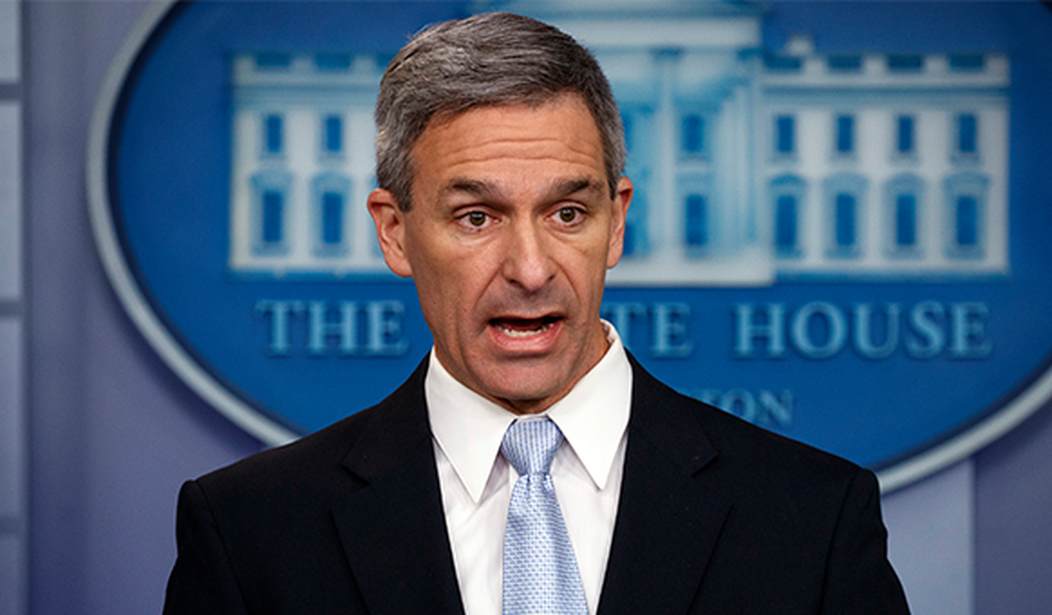
Post Comment Private Reply Ignore Thread
[Home] [Headlines] [Latest Articles] [Latest Comments] [Post] [Mail] [Sign-in] [Setup] [Help] [Register]