
United States News
See other United States News Articles
Title: EXCLUSIVE: Photos of the Northwest Airlines Bomb
Source:
ABC
URL Source: http://abcnews.go.com/Blotter/north ... photos/story?id=9436297&page=2
Published: Dec 28, 2009
Author: RICHARD ESPOSITO and BRIAN ROSS
Post Date: 2009-12-28 20:55:40 by borntoweardiamonds
Keywords: Photos, Bomb
Views: 1141
Comments: 10
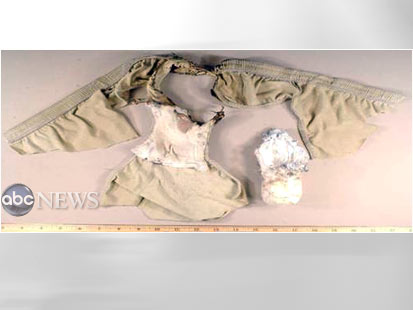
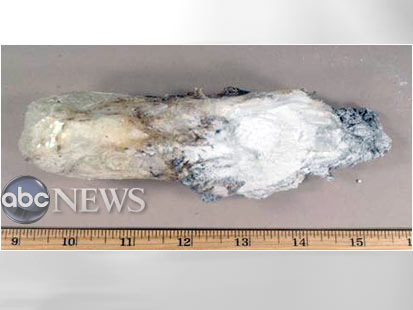
Accused Bomber Abdulmutallab's Underwear, Explosive Packet and Detonator A singed pair of underwear with a packet of powder sewn into the crotch, seen in government photos obtained exclusively by ABC News, is all that remains of al Qaeda's attempt to down an American passenger plane over Detroit. As seen in these photos, the alleged bomb consisted of a packet of powder sewn into the briefs of Umar Farouk Abdulmutallab, a 23-year-old Nigerian. Al Qaeda took credit Monday for the attempted bombing, boasted of its ability to overcome U.S. intelligence and airport security, and promised new attacks. The first photo, to the left, shows the slightly charred and singed underpants with the bomb packet still in place. All photos include a ruler to provide scale. Related Investigators: Northwest Bomb Plot Planned by al Qaeda in YemenWATCH: New Details Emerge About Christmas Bomber WATCH: Fears of More Bombers in the Pipeline UNDERWEAR WITH EXPLOSIVE PACKET In the second photo (below), the packet of actual explosive powder has been removed from the underpants and displayed separately. It is a six-inch long packet of the high explosive chemical called PETN, less than a half cup in volume, weighing about 80 grams. A government test with 50 grams of PETN blew a hole in the side of an airliner. That was the amount in the bomb carried by the so-called shoe bomber Richard Reid over Christmas 2001. The underpants bomb would have been one and a half times as powerful. Acid in Syringe Was Detonator The packet of PETN explosive powder is shown separately here. PETN PACKAGE Tragedy was averted only because the detonator, acid in a syringe, did not work. "It's very clear it came very, very close," said Rep. Pete Hoekstra, R.-Mich., ranking minority member of the House Intelligence Committee. "The explosive device went off, but it became an incendiary device instead of an explosive device, which is probably what saved that airplane." 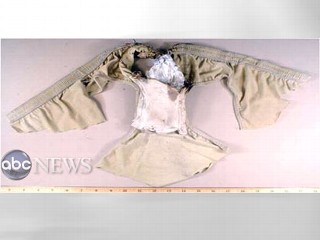
Post Comment Private Reply Ignore Thread
Top • Page Up • Full Thread • Page Down • Bottom/Latest
#1. To: borntoweardiamonds (#0)
LMAO!! Bullsh!t, you would be lucky to scorch a seat cushion with that thing.
Seems like something only abc would really care to take pictures of.
I'm hoping he scorched the parts that count. :)
You ought to do more than just look at the fookin photos. A government test with 50 grams of PETN blew a hole in the side of an airliner.
Sneakypete, have you ever been married? Said things you later regretted?
I hope he burned them off. No use letting something like that reproduce.
Sneakypete, have you ever been married? Said things you later regretted?
A government test with 50 grams of PETN blew a hole in the side of an airliner. LOL!! You think they tested it by spreading some of that stuff on a rag and and throwing some acid on it?
Much less then he had:
----------------------------------------------------------- LOL!! There is lots of scary stuff out there but that's not what's being discussed here.
No one claimed terrorists are intelligent. That "72 virgins" thing should be a hint.
Sneakypete, have you ever been married? Said things you later regretted?
LOL!! So now you agree that the whole thing was stupid. Make up your mind. You can't just come here and fart and giggle and expect to be taken seriously.
#2. To: borntoweardiamonds (#0)
A singed pair of underwear with a packet of powder sewn into the crotch, seen in government photos obtained exclusively by ABC News
#3. To: eskimo (#1)
#4. To: eskimo (#1)
LMAO!! Bullsh!t, you would be lucky to scorch a seat cushion with that thing.
#5. To: borntoweardiamonds (#3)
I'm hoping he scorched the parts that count. :)
#6. To: Ibluafartsky (#4)
You ought to do more than just look at the fookin photos.
#7. To: eskimo (#1)
Toss: ADL,CAIR and the Vatican into the pit they belong in.
#8. To: WhiteSands (#7)
#9. To: eskimo (#6)
LOL!! You think they tested it by spreading some of that stuff on a rag and and throwing some acid on it?
#10. To: Ibluafartsky (#9)
No one claimed terrorists are intelligent. That "72 virgins" thing should be a hint.
Top • Page Up • Full Thread • Page Down • Bottom/Latest
[Home] [Headlines] [Latest Articles] [Latest Comments] [Post] [Mail] [Sign-in] [Setup] [Help] [Register]