Title: Mundane Lives Don't Matter, So Don't Try to Exercise Your Rights Source:
Pro Libertate URL Source:http://freedominourtime.blogspot.com/ Published:Aug 5, 2016 Author:William Norman Grigg Post Date:2016-08-08 09:01:51 by Deckard Keywords:None Views:318
In every encounter between a police officer and a citizen, only one life matters to the former – and it isn’t the latter.
“Follow the commands of a police officer or risk dying,” snarled Major Travis Yates of the Tulsa Police Department in a recent essay for Law Officer. Requiring police officers to respect the rights of the citizens they detain, or to practice de-escalation when citizens assert their rights, would be tantamount to asking that “police stop being police” – that is, commissioned ministers of violence acting on behalf of the divine State.
Whenever a police officer inflicts himself on a citizen, every consideration is made for officer safety, despite the fact that the citizen is the one facing an immediate, known risk of lethal violence. A Mundane who acts upon specific police instruction to take minimal precautions for his own safety runs the additional risk of a ruinous and unjustified arrest – or a life-threatening assault by one of his privileged overseers in a state-issued costume.
Unfortunately for McIsaac and his wife Claire, the armed stranger who detained them was Lincoln County Sheriff’s Deputy Scott Denning. A police impersonator is immeasurably less dangerous than someone claiming to be invested with the mystical property called “authority” that supposedly allows him to use aggressive violence against someone who doesn’t submit to him.
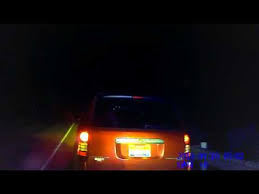
The encounter began badly, with Denning flinging four commands into McIssac’s face before identifying himself as an officer, or showing any credentials. No, a uniform and chintzy piece of costume jewelry didn’t qualify, and neither did the running lights on Denning’s vehicle. “Authentic” insignia don’t legitimately confer special rights or privileges on those who carry them, of course. However, it is useful for the victim of a roadside detention to know if the person who has stopped him can summon others in the event the victim decides to end the encounter on his own terms.
Denning demanded that McIsaac extinguish his cigarette, and they briefly argued as to whether the deputy’s “authority” extends to that detail. If the deputy were actually a servant, rather than someone claiming to exercise proprietary control over a citizen, he wouldn’t enjoy the privilege of telling the citizen to extinguish a cigarette while sitting in his own vehicle. Patrol officers are taught to pretend that they smell marijuana or alcohol during a traffic stop, and the demand that a driver snuff his cigarette is often a prelude to reciting that pretext for a vehicle search. (As the late Sandra Bland learned, that demand can also be an overture to an unlawful arrest that can have fatal consequences.)
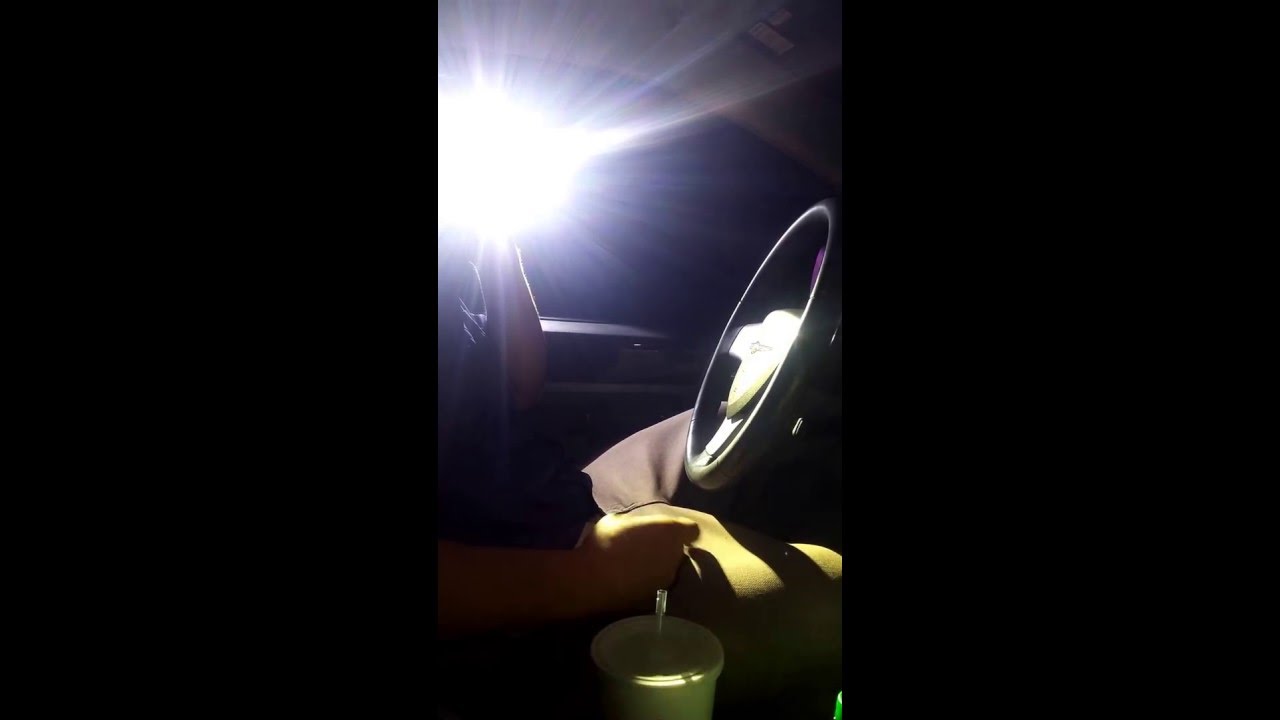
Doing as he was told: Daniel calls 911.
After Denning demanded that McIsaac exit the vehicle with his papers at the ready, the driver quite sensibly asked the deputy to provide him with his precinct number.
“For what?” Denning impatiently snapped.
“I’m going to call them report this,” McIsaac explained
“You go right ahead,” the deputy dismissively replied.
At this point in the conversation, Deputy Denning explicitly instructed McIsaac to confirm that he was dealing with a law enforcement officer, rather than an impersonator. From that point forward, McIsaac was complying with an officer’s instructions, and doing so with commendable composure in the face of Denning’s entirely needless escalation.
As McIsaac attempted to call the LCSO, Denning called for backup, and then growled: “Sir, comply with what I’m telling you or I’m going to arrest you.”
“There’s nobody else on the road – this is dangerous!” McIsaac correctly observed.
“No, it’s not,” Denning replied – meaning, of course, it wasn’t dangerous to the only person who mattered to him in the encounter.
“There’s nobody else on the road,” the driver pointed out. “How do I know you’re a cop? Show me your identification.”
“I don’t have to show you my identification,” Denning lied. “You can see I’m in full uniform and a marked unit” – a claim that has been made, within recent months, by police impersonators in that same section of Idaho.
“I’m calling 911 right now,” McIssac informed Denning.
“OK,” the deputy responded – for the second time explicitly authorizing McIsaac to take minimal precautions for his own safety.
McIsaac dialed 911 and requested another unit “because, you know, it can be very dangerous, with people impersonating cops, and stuff,” he told the operator. “He’s getting very, very aggressive…. I want to wait for another officer, because I am very uncomfortable.”
“Dispatch – have ‘em step it up,” Denning grunted into his lapel radio, which as it happens was the same course of action McIsaac was pursuing.
After finishing his 911 call, McIsaac emerged from the vehicle, and was arrested for “obstructing and delaying an officer.” The entire encounter had lasted five minutes and thirty-three seconds.
“Just so you know,” McIssac said after being cuffed and stuffed, “I wasn’t really trying to be rude. I hear lots of stories of people getting pulled over – you’ve probably heard those, too – I was told to call and make sure it’ safe….”
“You’re obstructing my duties,” his kidnapper insisted.
Actually, McIsaac was seeking to assure his own safety, and that of his wife, which he has every right to do. Exercising that right, however, is an act falling within the ever-expanding definition of the un-legislated, but sternly punished, offense called “contempt of cop.”
“I’ve been told in the past that if you’re pulled over on a deserted highway, to double-check,” McIsaac patiently elaborated.
“So – do you know many people who are out running around in full uniform in fully-marked patrol units that are impersonating police officers?” Denning sneer-gloated.
The answer to that question, the deputy most likely knew, was “yes.”
Police agencies across the country have consistently told the public that if there is any doubt as to the identity of the person conducting a traffic stop, drivers should proceed to a populated, well-lit stretch of road, or at least call 911 to verify that the highwayman has been given an official license to harass his betters.
In the event a driver is unsure about the identity of the person who has stopped him, “roll up your window, lock your door and call 911 and verify the person is a police officer,” counseled the IFPD. “If you feel your life is in danger, drive away – still maintain the speed limit and obey the rules of the road – to a well-lit, public area and call 911.”
Both the ISP and IFPD clearly encouraged drivers in McIsaac’s position not to comply until they were satisfied that it was safe to do so. Denning himself twice instructed McIsaac to act on that advice—and then arrested him for doing what he had been repeatedly been told, by police, was the appropriate thing.
McIsaac, who, once again resides in Idaho Falls, has a Master’s Degree and is employed as a counselor at a local rehabilitation facility. He was polite in the exercise of his rights as they had been explained to him by three entities or individuals speaking on behalf of the government. His arrest was thus an act of entrapment by estoppel – a due process violation that occurs when a citizen is charged with a crime for conduct that he had been assured was legal and proper.
Although McIsaac has been found guilty of nothing, he and his family have already been punished because he behaved precisely as the police had instructed him. If he is convicted of the "crime" of following well-established citizen safety protocols, McIsaac could be sent to jail for a year.
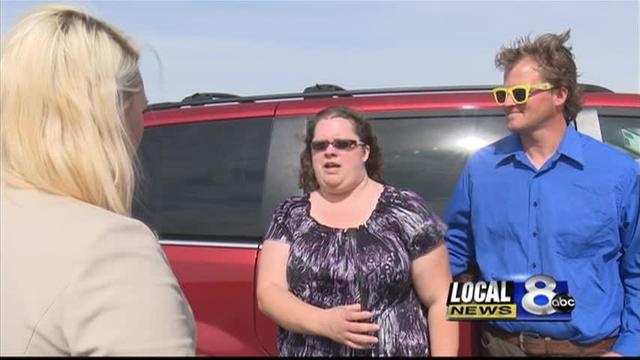
“I was able, by some miracle, to get $610 from an ATM at 3:30 in the morning to pay Dan’s bail,” his wife Claire told Pro Libertate. The couple has made four 300-mile round trips from Idaho Falls to Shoshone to attend three pre-trial hearings and an abortive trial on July 25.
The trial was postponed during voir dire when it became clear that few, if any, of the potential jurors understood the concept of presumption of innocence. Owing to the stupid intransigence of the prosecutor’s office in pursuing a manifestly invalid criminal case, the McIsaacs will be compelled to make at least one more round-trip: Their trial was originally rescheduled for August 15, and then capriciously pushed back again to October 4.
Claire estimates that the family has already been forced to sink more than a thousand dollars into this legal struggle, which – although she was far too polite to say as much – was inflicted on them because a pathologically self-preoccupied deputy took offense that a Mundane tried to act in the interests of his safety, and that of his wife. After all, in such encounters, only “Blue Lives” really matter.