
United States News
See other United States News Articles
Title: Designer Harley Earl: Prototype Cars That Never Made It
Source:
View Zone
URL Source: http://www.viewzone.com/cars-demos.html
Published: Jul 2, 2014
Author: Brian Packard
Post Date: 2016-07-02 13:43:22 by Deckard
Keywords: None
Views: 1534
Comments: 4
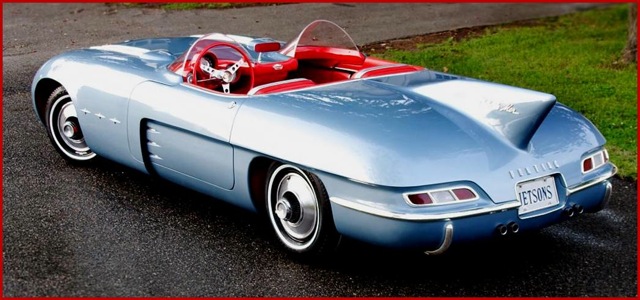
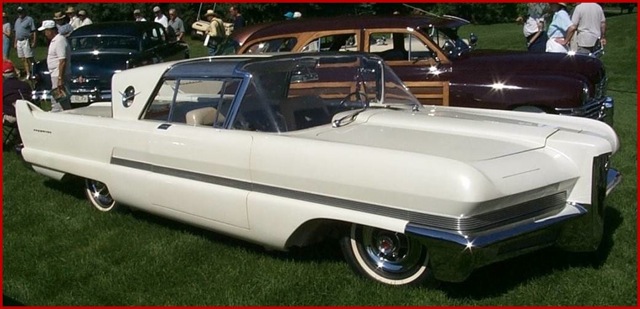
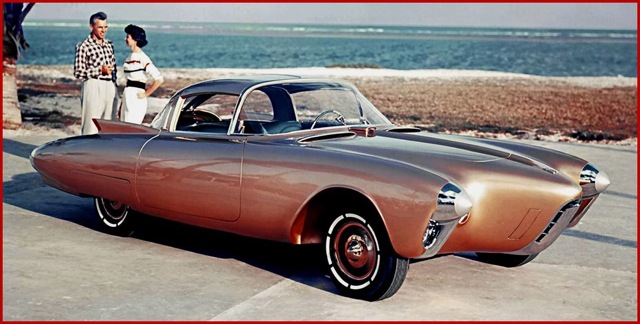
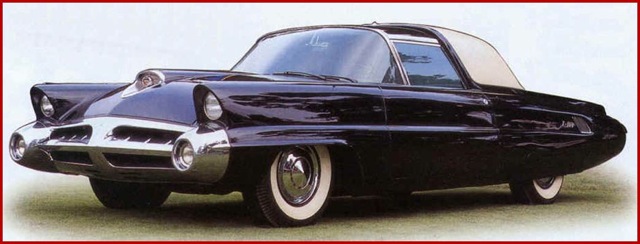
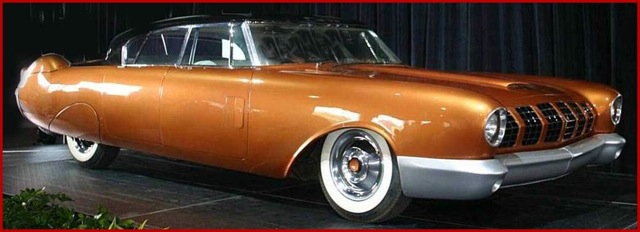
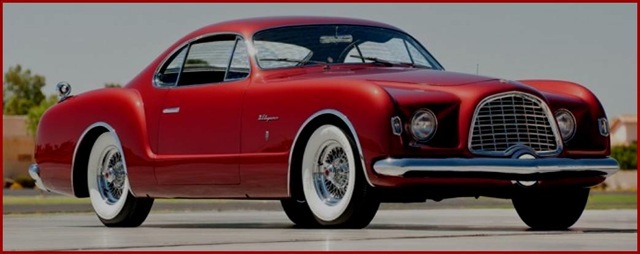
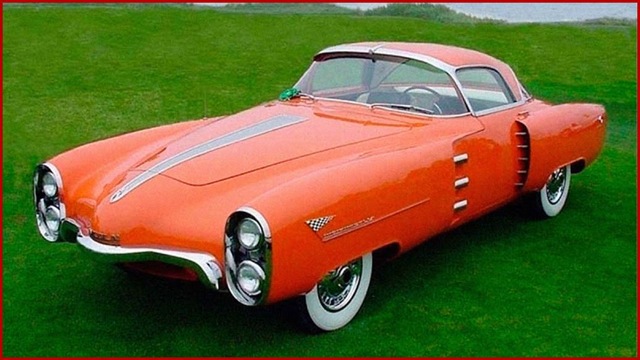
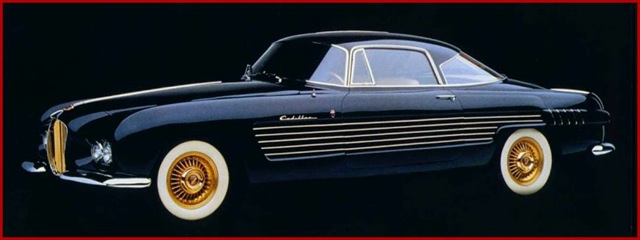
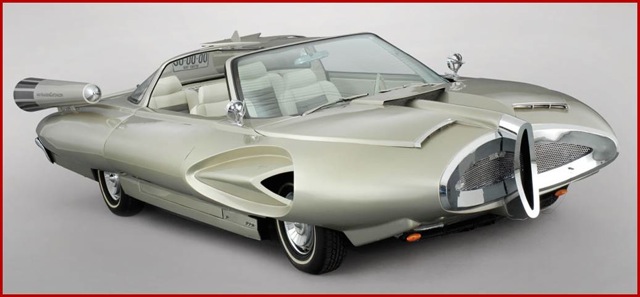
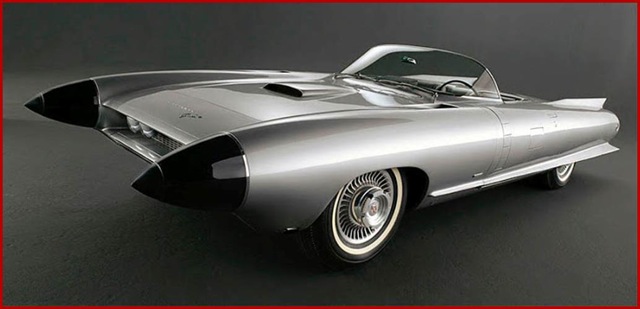
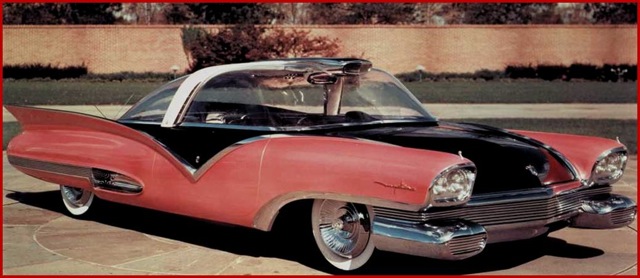
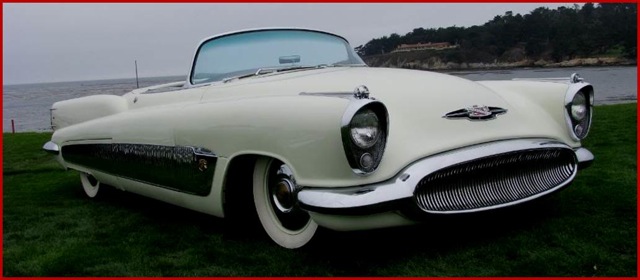
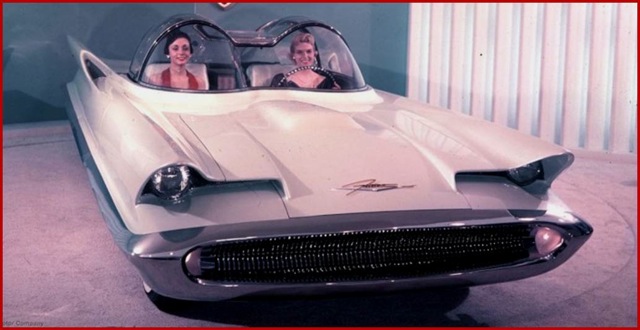
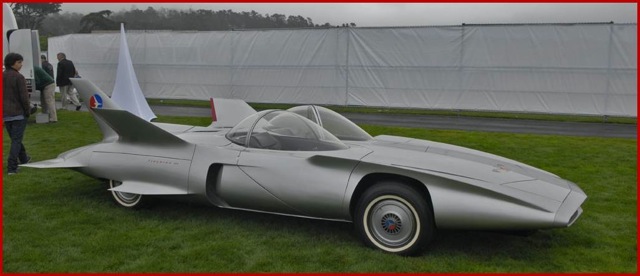
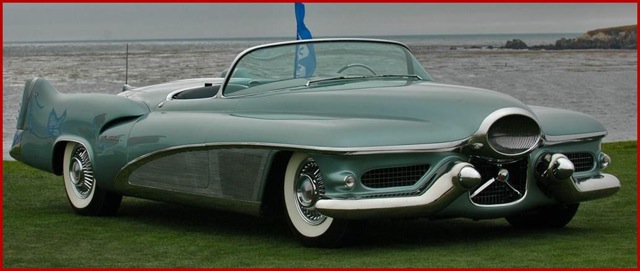
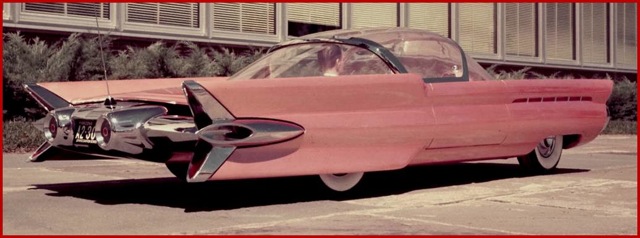
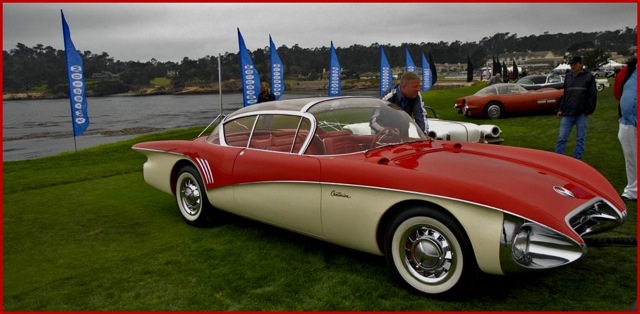
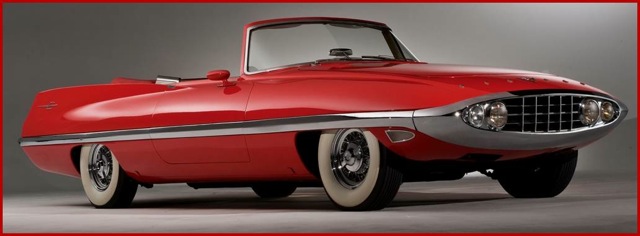
A concept vehicle or show vehicle is a car made to showcase new styling and/or new technology. They are often shown at motor shows to gauge customer reaction to new and radical designs which may or may not be mass-produced. General Motors designer Harley Earl is generally credited with inventing the concept car, and did much to popularize it through its traveling Motorama shows of the 1950s. Before I tell you about Harley Earl, let me show you some of the concept or "prototype" cars he envisioned and influenced. Prototype Cars That Never Made It The 1954 De Soto Adventurer Of all the concept cars ever shown off to a fawning public, one of the coolest has got to be this 1954 Desoto Adventurer II Coupe. It was originally built in 1954, and it sits atop a Chrysler Imperial chassis with a body designed and built by Ghia. A 54 Desoto recently sold for $1,430,000 at the Barrett-Jackson auction in 2012! The 1956 Pontiac Club The 1956 Pontiac Club De Mer was the unique masterpiece of GM's Motorama car show for 1956. The body was made out of anodized brushed aluminum and was a scant 38 inches high. The engine compartment housed a 300 horsepower Stato-Streak V8 engine with dual 4 barrel carburetors. The companion car for the full scale Club De Mer was a quarter scale model, which traveled with the car to all of the auto shows throughout the United States. While the full scale model was destroyed in 1958, the Quarter Scale Model was retained by General Motors and was later motorized by Harley Earl, chief designer of General Motors and given to his grandson, whose first name was tiger, as a peddle car. Thereafter the car went through several hands and was recently purchased and restored by the Bortz Auto Collection. The 1956 Packard Predictor Perhaps the worst-named concept car of the 1950s was the Packard Predictor. It did little to predict the future of automotive design beyond a couple years, and worse yet, it was a bad joke on the future of Packard itself. Sure, the Predictor's reversed rear window and swivel bucket seats would appear on production cars, but the Edsel-style front bumper helped spell doom for that automaker. Regardless, these features were very 1950s and the package as a whole was certainly wild and awe-inspiring during the jet age. We can't predict the past's future on a path not chosen, but we can't help think what Packard's future might have held had the Predictor design made it to production. It survives. The 1956 Oldsmobile Rocket If it weren't for the wheels and tires, Oldsmobile's 1956 Golden Rocket might look as though it were a rocket plucked straight from under the wing of a F-94 jet plane and given the plane's cockpit cover. No other 50s dream car took the jet-age theme more seriously than the Golden Rocket. Its three-point nose, rocket-tip rear bumper caps and rounded side panels to tie the front and back together made the Golden Rocket look like, well, a rocket with wheels. There was even a lateral fin on the rear deck for good measure. While the nose was smooth for good air stream, there was a vent located in the center prow, flanked by projectiles at the tips of the pointed front fenders. As though more jet-age inspiration were necessary, several cockpit controls were placed in the center of the steering wheel. A central console that began on the instrument panel and extended to the console was not unlike that found in today's cars, but the lift-up roof panels for easy entry and egress were very much a jet-age feature of the Golden Rocket. The metallic gold Golden Rocket was promoted as a "glittering new experimental car by Oldsmobile," but the shine soon wore off. Exactly where this car landed after the 1956 Motorama season is anyone's guess. The 1953 Ford X-100 The 1954 Mercury D524 The 1952 Chrysler D'Elegance The 1955 Lincoln Indianapolis The 1953 Cadillac Ghia Despite its handsome appearance, only four prototypes of this car were built between 1953 nd 1954. The 1958 Ford X-2000 In the 1950s, automotive magazines were filled with images of space-age cars and visions of the future, and the 1958 Ford X2000 was one of them. the 1958 Ford X2000 is powered by a 352 cu. in. V8 engine that outputs 220bhp and is coupled with an automatic transmission. The car is equipped with an independent front suspension with upper and lower control arms and coil springs and a live axle with semi-elliptic leaf springs rear suspension. Harley J. Earl (November 22, 1893 - April 10, 1969) was the initial designated "Head of Design" at General Motors, later becoming Vice President, the first top executive ever appointed in Design of a major corporation in American history. He was an industrial designer and a pioneer of modern transportation design. A coachbuilder by trade, Earl pioneered the use of freeform sketching and hand sculpted clay models as automotive design techniques. He subsequently introduced the "concept car" as both a tool for the design process and a clever marketing device. Earl Automotive Works was bought by Cadillac dealer Don Lee, who kept Harley Earl as director of its custom body shop. Lawrence P. Fisher, general manager of the Cadillac division, was visiting Cadillac dealers and distributors around the country, including Lee. Fisher met Earl at Lee's dealership and observed him at work. Fisher, whose automotive career began with coachbuilder Fisher Body, was impressed with Earl's designs and methods, including the use of modeling clay to develop the forms of his designs. Fisher commissioned Earl to design the 1927 LaSalle for Cadillac's companion marque. The success of the LaSalle convinced General Motors president Alfred P. Sloan to create the Art and Color Section of General Motors, and to name Earl as its first director. Prior to the establishment of the Art and Color Section, American automobile manufacturers did not assign any great importance to the appearance of automobile bodies. Volume manufacturers built bodies designed by engineers guided only by functionality and cost. Many luxury-car manufacturers, including GM, did not make bodies at all, opting instead to ship chassis assemblies to a coachbuilder of the buyer's choice. In 1937, the Art and Color Section was renamed the Styling Section. Sloan eventually promoted Earl all the way to the vice president level, making him (to Sloan's knowledge) the first styling person to be a VP at a large corporation. Harley Earl and Alfred P. Sloan implemented "Dynamic Obsolescence" (essentially synonymous with planned obsolescence) and the "Annual Model Change" (tying model identity to a specific year) to further position design as an engine for the company's product success. These ideas are largely taken for granted today but were unusual at the time. The 1954 Oldsmobile Rocket " Harley Earl, the legendary automotive stylist, designed the F-88 under the belief that it would have outsold the Corvette and forever changed automotive history. Unfortunately Chevrolet, which produced more GM products than any of its other divisions, convinced the GM board of directors to cut the Oldsmobile project. The F-88 never went into production due to that sabotage combined with lukewarm Corvette sales. The 1954 Oldsmobile F-88 was strictly ever a dream car." The 1959 Cadillac Cyclone Built in 1959, it is one of Harley Earl's last designs. Its futuristic styling was heavily influenced by 1950's aviation and rocketry. The 1954 Ford Mystere As much as the Ford Mystere was a product of the jet age, it was also a product of the atomic era. Its multiple antennae and air scoops made it prepared for whatever whiz-bang devices man had invented or could possibly dream of creating. A telephone, television and button and lever controls gave it a futuristic feel inside. On the outside, its jet-age influence was most visible in its clear-roof canopy, twin jet-plane rear exhaust ports and its long, low stance that made it appear as though it was hovering above this planet or the next. It was a package that George Jetson would have proudly ridden to a day at Spacely Sprockets. For all of its futurism, the wild Mystere featured traits that would appear on production Fords. The side trim made it to 1955 and '56 Fords and the fins to 1957 Fords. It's easy to picture Junior playing with his Robby the Robot from the back seat while Mom prepared pills for a picnic warmed in the in-car microwave oven.Although the Mystere swooped into the hearts of showgoers during the late 1954 show season, its subsequent history is a black hole. The 1951 Buick XP300 Envisioned by Charles Chayne, head of GM Engineering at the time, the Buick XP 300 was conceived as an experiment in styling and engineering. The lightweight aluminum body and skirted rear wheel openings make the XP 300 appear as if it is floating. Coupled with a high horsepower engine, Charles Chayne himself tested the XP 300's performance by reaching more than 140 miles per hour during an engineering test run. The 1955 Lincoln Futura Before it was the Batmobile it was the 1955 Lincoln Futura concept car. The Batmobile-to-be was the brainchild of Lincoln Mercury's postwar chief stylist, Bill Schmidt. Inspired by a scuba-diving encounter with a shark, Schmidt sketched a low, long, wide, and flat vision of the future with a predatory full width grille, ominously hooded headlights, and killer tail fins. Built by Ghia in 1954, the $250,000 dream car was dubbed the Lincoln Futura. It took just three months to ready the concept car for its debut at the Chicago Auto Show in January 1955. From there, the futuristic Lincoln was driven to a show in Detroit. On March 3rd, just before the NY Auto Show, with Benson Ford at the experimental steering wheel and Schmidt in the passenger seat, the Futura cruised from the United Nation's building through Central Park to the Tavern on the Green (restaurant) for a photo session. The Futura went on The Ed Sullivan Show, which Lincoln sponsored, then to a guest shot on Dave Garroway's TV Show. The 1958 GM Firebird Motorama car shows were a fixture of the fabulous Fifties and fans of The General's futuristic visions couldn't wait to see what next year’s show would bring. The pressure of continually improving on the most futuristic designs possible led to some truly bizarre concept cars. By 1958 things were really getting out of hand, as illustrated by the outlandish Firebird III. The 1956 Buick Le Sabre The 1954 Ford LaTosca Ford La Tosca concept car was designed by Alex Tremulis. The La Tosca evolved into the design for the '58 Lincoln. The 1956 Buick Centra Buick first used the Century nameplate in the 1930s, commemorating its ability to exceed 100 mph. The year to see a Buick wearing the 'Century' name in the post World War II was in 1954. This model had Buick's most powerful engine in the smallest model, and fitted with tastefully understated bodywork. The Century's 'Fireball' overhead-valve V8 engine was capable of producing 255 horsepower in 1956. Zero-to-sixty took less than ten seconds, with the quarter-mile times of around 17 seconds and a top speed exceeding 110 mph. The Century was styling, with the four oval 'ventiports' and leather trim. For 1956, Buick built just 4,721 Century Convertible Coupes. The 1956 Chrysler Diablo Here is the extremely rare and stunning 1957 Chrysler Diablo, also the result of collaboration with Ghia and considered the most valuable concept car from the 1950s.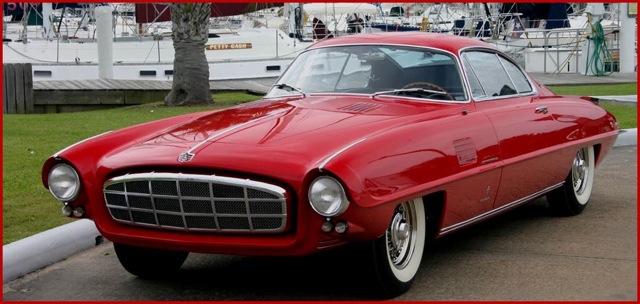
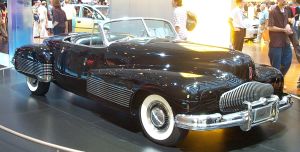 Earl's Buick Y-Job[right] was the first concept car. He started "Project Opel", which eventually became the Chevrolet Corvette, and he authorized the introduction of the tailfin to automotive styling. During World War II, he was an active contributor to the Allies' research and development program in advancing the effectiveness of camouflage.
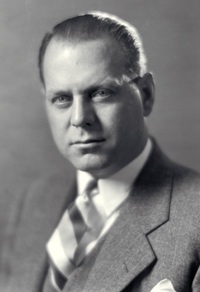 The executives at General Motors at the time, including engineers, division heads, and sales executives, viewed Earl's conceptual ideas as flamboyant and unfounded. Earl struggled to legitimize his design approach against the tradition- and production-oriented executives. As head of the newly formed Art and Color Section in 1927, he was initially referred to as one of the "pretty picture boys", and his Design Studio as being the "Beauty Parlor".
[source]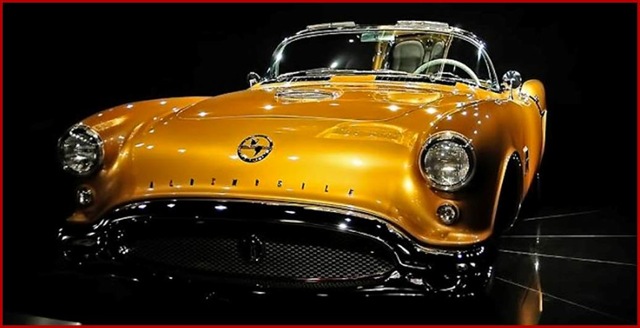
Post Comment Private Reply Ignore Thread
Top • Page Up • Full Thread • Page Down • Bottom/Latest
#1. To: sneakypete, buckeroo, hondo68, *Music*, *Cars and Automotive* (#0)
Fun stuff - Ping
Sure would like to own a few of those. I could not afford the insurance for one.
Si vis pacem, para bellum Those who beat their swords into plowshares will plow for those who don't Rebellion to tyrants is obedience to God. if you look around, we have gone so far down the the rat hole, the almighty is going to have to apologize to Sodom and Gomorrah, if we don't have a judgement come down on us. President Obama is the greatest hoax ever perpetrated on the American people. --Clint Eastwood "I am concerned for the security of our great nation; not so much because of any threat from without, but because of the insidious forces working from within." -- General Douglas MacArthur
You and me both. The 50's through the 70's were the golden age of autos in my opinion, probably because designers had some imagination. Back when I was a kid in the 60's, each model car was distinct from all the others. Now it seems, they all come from the same mold, I can't tell the difference between a 2016 Chevy and a Ford for the most part. Yeah, I remember back in those days after dark, you could look at the headlights or tail lights and know what it was. Like you said, today, they are all the same. I remember cars that they do not even talk about now, Avanti, Studebaker " Hawk " I think, Hudson, and a few others. Si vis pacem, para bellum Those who beat their swords into plowshares will plow for those who don't Rebellion to tyrants is obedience to God. if you look around, we have gone so far down the the rat hole, the almighty is going to have to apologize to Sodom and Gomorrah, if we don't have a judgement come down on us. President Obama is the greatest hoax ever perpetrated on the American people. --Clint Eastwood "I am concerned for the security of our great nation; not so much because of any threat from without, but because of the insidious forces working from within." -- General Douglas MacArthur
“Truth is treason in the empire of lies.” - Ron Paul

"America is at that awkward stage. It's too late to work within the system, but too early to shoot the bastards."
#2. To: Deckard (#1)
#3. To: Stoner (#2)
Sure would like to own a few of those.
“Truth is treason in the empire of lies.” - Ron Paul
"America is at that awkward stage. It's too late to work within the system, but too early to shoot the bastards."
#4. To: Deckard (#3)
" Back when I was a kid in the 60's, each model car was distinct from all the others. Now it seems, they all come from the same mold, I can't tell the difference between a 2016 Chevy and a Ford for the most part. "
Top • Page Up • Full Thread • Page Down • Bottom/Latest
[Home] [Headlines] [Latest Articles] [Latest Comments] [Post] [Mail] [Sign-in] [Setup] [Help] [Register]