
United States News
See other United States News Articles
Title: Massachusetts Committee Passes Bill to Expand Raw Milk Sales; Set Foundation to Nullify Federal Prohibition Scheme
Source:
Activist Post
URL Source: http://www.activistpost.com/2016/06 ... llify-federal-prohibition.html
Published: Jun 1, 2016
Author: Michael Maharrey
Post Date: 2016-06-02 08:23:32 by Deckard
Keywords: None
Views: 1151
Comments: 5
Last week, a Massachusetts joint committee passed an agriculture bill that would expand raw milk sales in the state. Passage of the bill into law would facilitate the process of nullifying the federal prohibition scheme in practice. The Senate Ways and Means Committee created Senate Bill 2286 (S.2286) to incorporate several measures relating to agriculture. It replaced S.2171, which was created by a joint committee on Environment Natural Resources and Agriculture. The bill number has changed several times. The legislation would allow farmers to deliver raw milk to consumers through contractual arrangements. Licensed raw milk farmers shall be allowed to deliver raw milk directly to the consumer, off-site from the farm, provided that the raw milk farmer has a direct, contractual relationship with the consumer. The raw milk farmer may contract with a third party for delivery provided that the raw milk farmer shall maintain the contractual relationship with the consumer. The raw milk farmer may deliver raw milk through a community supported agriculture (CSA) delivery system provided that the raw milk farmer shall maintain a contractual relationship with the consumer. Delivery may be made directly to the consumer’s residence or to a pre-established receiving site; said sites shall not be in a retail setting with the exception of CSA delivery. In such instances, raw milk shall be kept separated from retail items for sale and will not be accessible to the general public. S.2286 would also allow farmers to sell raw milk from a farm stand even if it is not directly attached to the raw milk dairy. This would open the door to raw milk sales at farmer’s markets. On May 23, the Joint Committee on Rules passed the legislation with a favorable report. It now moves to the House Ways and Means Committee for further consideration. Provisions in the original bill that would have allowed farmers to sell raw milk through “herd sharing agreements” were stripped from the bill by the Ways and Means Committee. Sen. Benjamin Downing (D – Pittsfield) attempted to put the language back in the bill through an amendment on the Senate floor, but it was rejected. Under current Massachusetts law, raw milk sales are only allowed on the farm. While limited, the measures in S.2286 would expand the sale and consumption of unpasteurized milk in the state. FDA officials insist that unpasteurized milk poses a health risk because of its susceptibility to contamination from cow manure, a source of E. coli. “It is the FDA’s position that raw milk should never be consumed,” agency spokeswoman Tamara N. Ward said in November 2011. The FDA’s position represents more than a matter of opinion. In 1987, the feds implemented 21 CFR 1240.61(a), providing that, “no person shall cause to be delivered into interstate commerce or shall sell, otherwise distribute, or hold for sale or other distribution after shipment in interstate commerce any milk or milk product in final package form for direct human consumption unless the product has been pasteurized.” Not only do the Feds ban the transportation of raw milk across state lines, they also claim the authority to ban unpasteurized milk within the borders of a state. “It is within HHS’s authority…to institute an intrastate ban [on unpasteurized milk] as well,” FDA officials wrote in response to a Farm-to-Consumer Legal Defense Fund lawsuit against the agency over the interstate ban. The FDA clearly wants complete prohibition of raw milk and some insiders say it’s only a matter of time before the feds try to institute an absolute ban. Armed raids by FDA agents on companies like Rawsome Foods back in 2011 and Amish farms over the last few years also indicate this scenario may not be too far off. Passage of S.2286 would take a step toward nullifying this federal prohibition scheme in effect. As we’ve seen with marijuana and industrial hemp, an intrastate ban becomes ineffective when states ignore it and pass laws encouraging the prohibited activity anyway. The federal government lacks the enforcement power necessary to maintain its ban, and people will willingly take on the small risk of federal sanctions if they know the state will not interfere. This increases when the state actively encourages the market and nullifies federal prohibition in effect. We’ve seen this demonstrated dramatically in states that have legalized industrial hemp. When they authorized production, farmers began growing industrial hemp, even in the face of a federal ban. Despite facing the possibility of federal prosecution, some growers were still willing to step into the void and begin cultivating the plant once the state removed its barriers. In practice and effect, it could ultimately nullify the interstate ban as well. If all 50 states allow raw milk, markets within the states could easily grow to the point that local sales would render the federal ban on interstate commerce pointless. And history indicates the feds do not have the resources to stop people from transporting raw milk across state lines – especially if multiple states start legalizing it. Growing markets will quickly overwhelm any federal enforcement attempts. 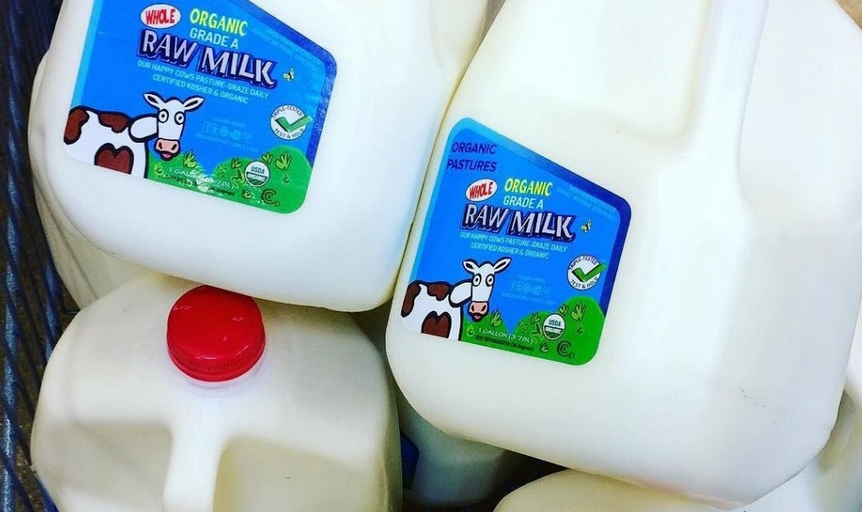
Federal Prohibition
Nullifying the Federal Scheme
 In the same way, removing state barriers to raw milk consumption, sale and production would undoubtedly spur the creation of new markets for unpasteurized dairy products, no matter what the feds claim the power to do.
Post Comment Private Reply Ignore Thread
Top • Page Up • Full Thread • Page Down • Bottom/Latest
Begin Trace Mode for Comment # 2.
#1. To: Deckard (#0)
I say let Massachusetts legalize raw milk as long as the milk stays in Massachusetts. But if people get sick and die, I do not want my federal tax dollars used to clean up their mess. That includes using agencies like the CDC to track down the source of contamination.
This is the FDA's attempt to protect the dairy industry from small producers. Everything in government today is about money and they could care less who gets sick or even dies. The government is in bed with big business.
#5. To: U don't know me (#2)
With raw milk going for $10 per gallon, they're as much of a threat as "organic" food producers.
Top • Page Up • Full Thread • Page Down • Bottom/Latest
#2. To: misterwhite (#1)
legalize raw milk
Replies to Comment # 2. "This is the FDA's attempt to protect the dairy industry from small producers."
End Trace Mode for Comment # 2.
[Home] [Headlines] [Latest Articles] [Latest Comments] [Post] [Mail] [Sign-in] [Setup] [Help] [Register]