
United States News
See other United States News Articles
Title: Over $1 Trillion Spent Since Nixon Began The War On Drugs
Source:
Mint Press News
URL Source: http://www.mintpressnews.com/war-on-drugs/211217/
Published: Nov 12, 2015
Author: Kit O'Connell
Post Date: 2015-11-12 09:07:12 by Deckard
Keywords: None
Views: 2950
Comments: 7
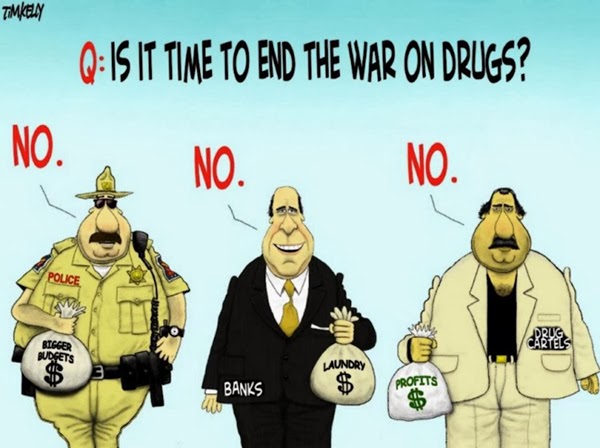
WASHINGTON — The “war on drugs” costs Americans a staggering amount of money every year that it persists. Despite the billions they receive, federal, state and local law enforcement have a proven inability to stem the flow of drugs on the nation’s streets. Since Richard Nixon declared a war on drugs in June 1971, the cost of that “war” had soared to over $1 trillion by 2010. Over $51 billion is spent annually to fight the drug war in the United States, according to Drug Policy Alliance, a nonprofit dedicated to promoting more humane drug policies. It’s also taken a massive toll on human lives. In 2013, at least 2.2 million people were incarcerated in the U.S., with some estimates reaching 2.4 million, making the U.S. home to the world’s largest prison population. A vast number of those prisoners are victims of the war on drugs, reported Alejandro Crawford in U.S. News and World Report in March: “Still, we should take comfort in the fact that these are mostly violent criminals and hardened drug kingpins, right? Not so. About half the inmates in the federal prison system are there for nonviolent drug crime – up from 16 percent in 1970 – and the leading drug involved is marijuana. Of course, none of this seems to have made marijuana remotely difficult to procure for those who want it.” Although four states and Washington, D.C., have legalized marijuana, and 23 states allow at least limited use of medical marijuana or cannabidiol (CBD) oil, someone is arrested about once every minute for marijuana possession in the U.S., according to the Washington Post’s Christopher Ingraham: “In 2014, at least 620,000 people were arrested for simple pot possession — that’s 1,700 people per day, or more than 1 per minute. And that number is an undercount, because a handful of states either don’t report arrest numbers to the FBI, or do so only on a limited basis.” Ingraham noted that even as some marijuana laws grew less restrictive and some states legalized recreational use, arrests crept up slightly in 2014 as other jurisdictions stepped up enforcement, reflecting an overall trend toward increased focus on cannabis: “Nationwide, more than 1 in 20 arrests were for simple marijuana possession. Twenty years ago, near the dawn of the drug war, fewer than 2 percent of arrests were for pot possession.” Drug prohibition is extremely profitable for police and the prison-industrial complex. Yet Crawford pointed out that while policies of prohibition have already failed society twice in the U.S., legalization offers some proven benefits, including reducing power and profits for organized crime: “While states across our land continue to imprison nonviolent users and low-level growers and dealers, such cartels depend for a non-trivial portion of their revenues on the false premium supplied by prohibition. Since prohibition has been repealed in key states, the prison population appears finally to have begun to decline, and cartels face falling prices for marijuana.”Despite increasing recognition of its usefulness as a medicine and increasingly state-level legalization, someone in the U.S. is arrested for marijuana possession about once every minute.
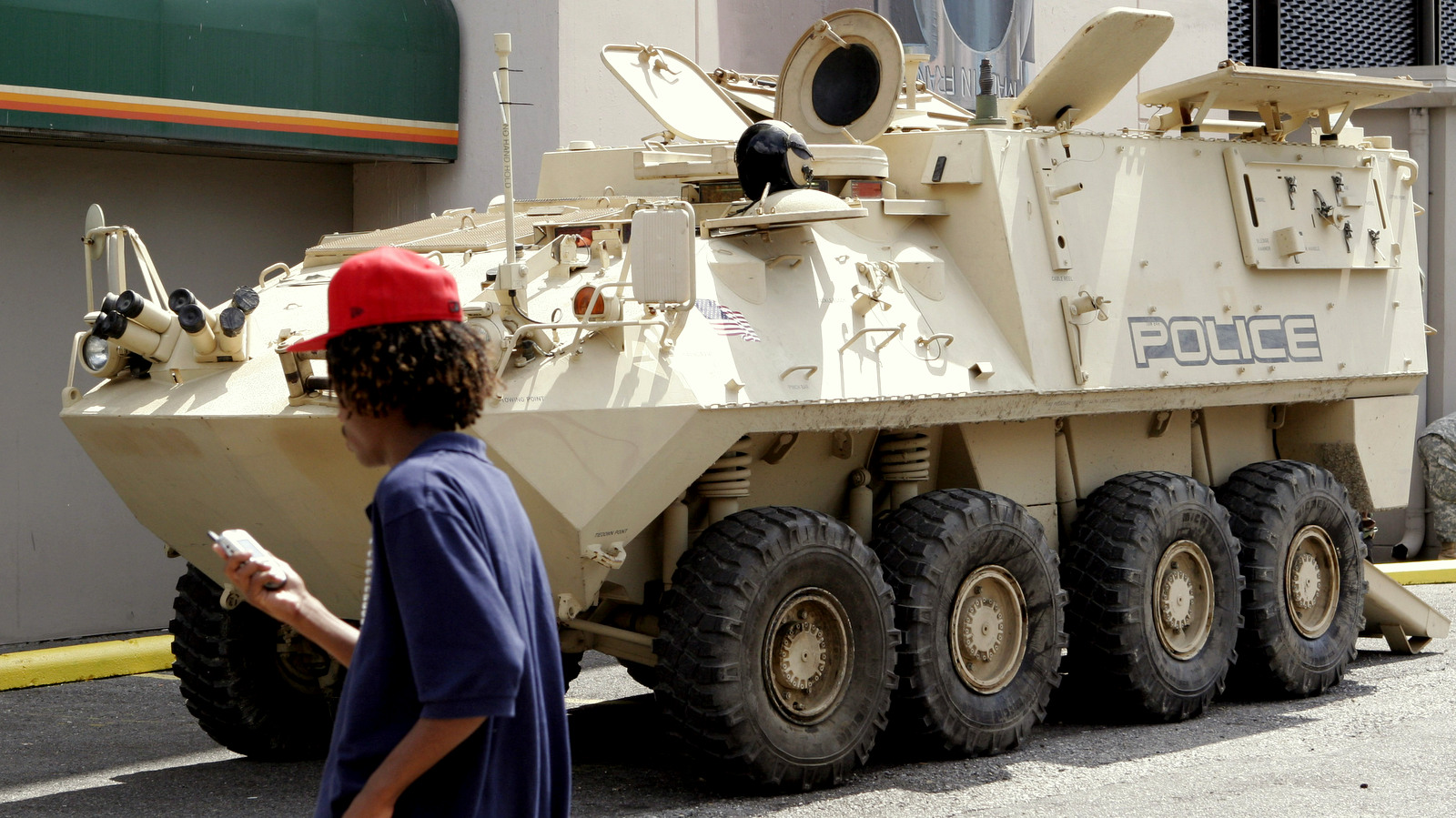
An armored vehicle used by state and local authorities for drug enforcement is brought
into the city for school kids to tour in New Orleans/ (AP Photo/Alex Brandon)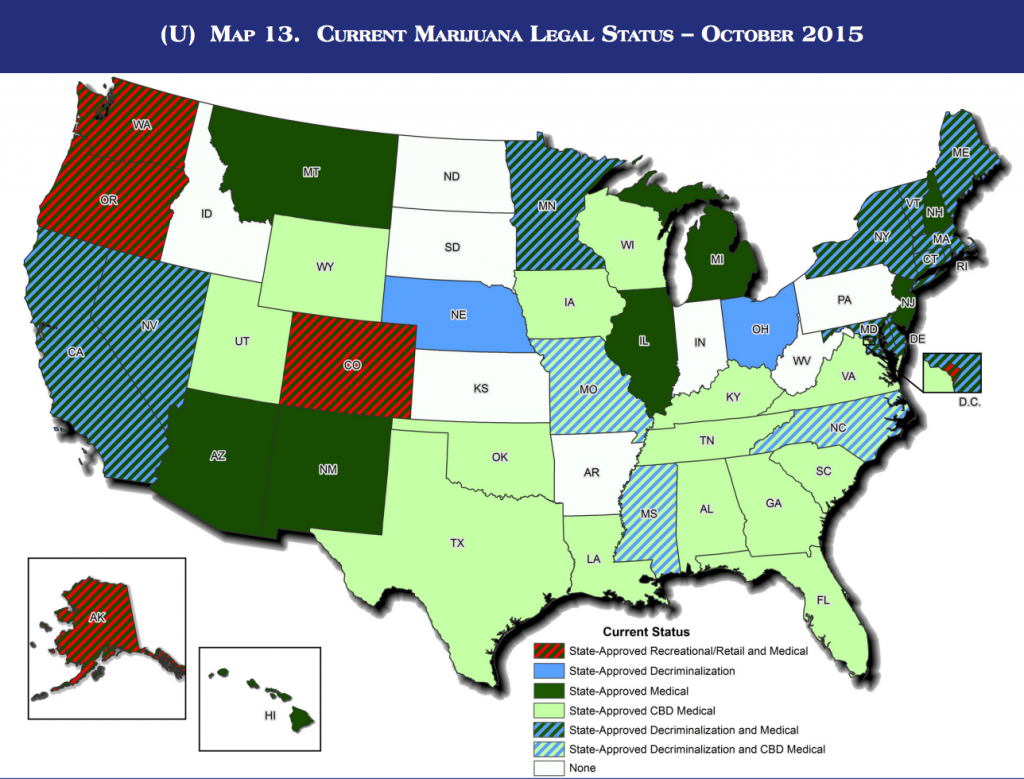
Source: Marijuana.com
(2 images)
Post Comment Private Reply Ignore Thread
Top • Page Up • Full Thread • Page Down • Bottom/Latest
#1. To: Deckard (#0)
The war on drugs in the inverse of the war on sanity, competence, and citizen awareness.
In a Cop Culture, the Bill of Rights Doesn’t Amount to Much It's time to do an honest psychiatric reveiw of the involutional effect of drugs on the individual and their detrimental effects upon society. They are mind deteriorating poison.
So we should legalize all drugs, including prescription drugs for everyone?
We have spent 22 trillion dollars on welfare during that same period, much of it on families destroyed by dopers.
Given that the figure of $1 trillion for drug enforcement is a lie, there's no reason for you to tell the truth. Go with $220 trillion for welfare.
Did I type trillion? I meant zillion!
Over $1 Trillion Spent Since Nixon Began The War On Drugs
#2. To: rlk (#1)
“Truth is treason in the empire of lies.” - Ron Paul

Americans who have no experience with, or knowledge of, tyranny believe that only terrorists will experience the unchecked power of the state. They will believe this until it happens to them, or their children, or their friends.
Paul Craig Roberts
#3. To: Deckard (#2)
(Edited)
#4. To: Deckard (#2)
#5. To: misterwhite (#4)
#6. To: Roscoe (#5)
"We have spent 22 trillion dollars on welfare during that same period, much of it on families destroyed by dopers."
#7. To: misterwhite (#6)
Top • Page Up • Full Thread • Page Down • Bottom/Latest
[Home] [Headlines] [Latest Articles] [Latest Comments] [Post] [Mail] [Sign-in] [Setup] [Help] [Register]